Method · Legal framework
Widadiya: why we advise Moroccans abroad against this route
The advertised discount runs to 20 or 30 %. Our position is that it does not compensate for the risk taken, and that it compensates for it even less when you live 2,000 kilometres from the site.
The reasoning rests on three findings. The arrangement offers none of the protections that cover a buyer purchasing off-plan. The control mechanisms that make up for that gap require a continuous physical presence. And the discount obtained is hard to convert into cash, since no individual title is issued for several years.
Each point can be argued on its own. Taken together, they make the arrangement unsuited to a buyer living abroad.
What you are buying: a share, not a home
Cooperatives fall under Law No. 112-12 of 21 November 2014, which replaced Law No. 24-83. Since 2016, a register of cooperatives set up by Decree No. 2-15-617 has given them a verifiable official existence: the registration can be requested and read.
The widadiya, or amicale, falls under association law instead. A group of people who do not own the land come together to carry a shared property project. The framework is far looser, which becomes a problem as soon as it is used to sell homes.
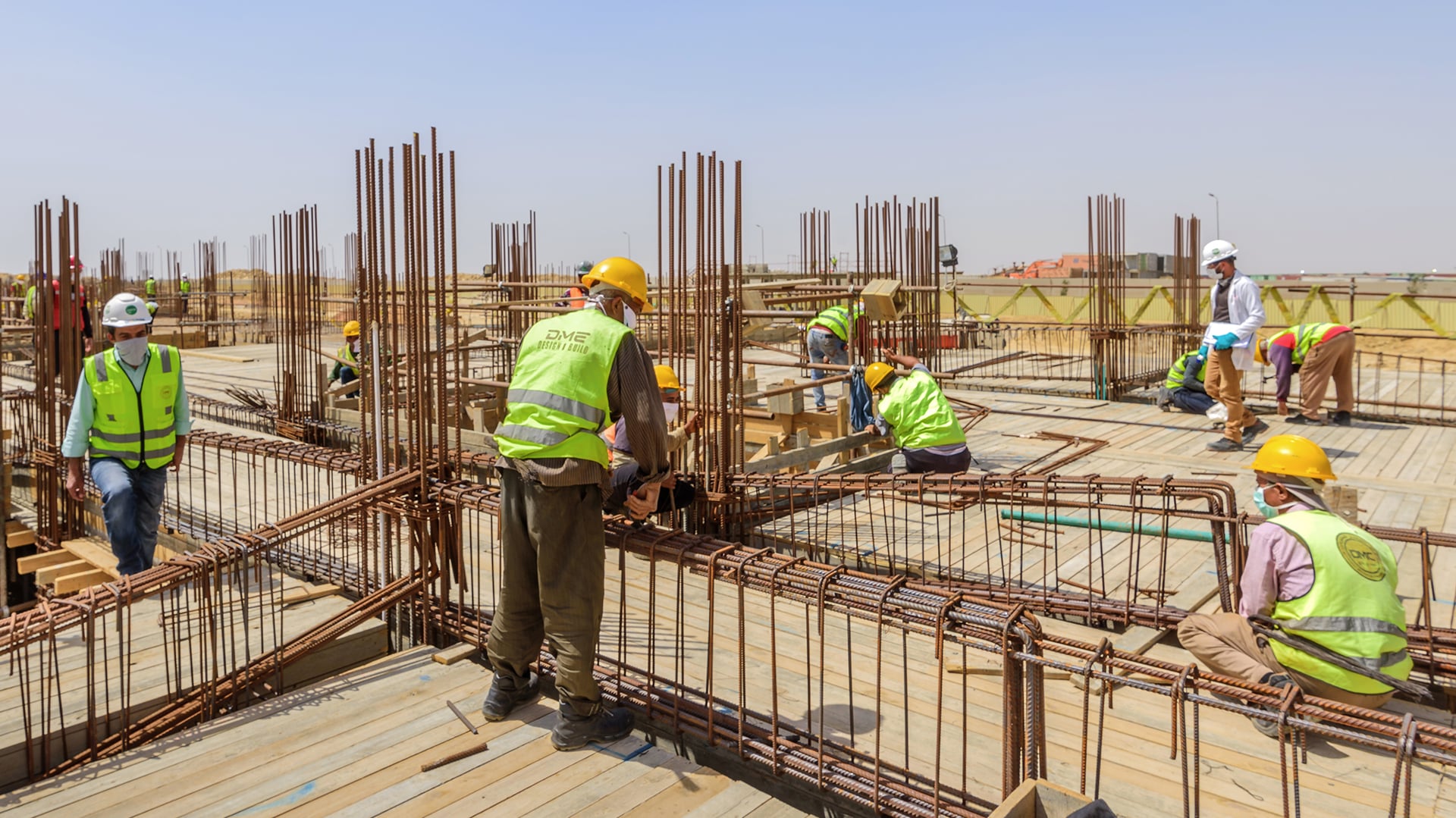
In practice, these structures often behave like developers. A manager reserves a plot, then looks for members and funds construction with the instalments collected as the works progress. Many buyers were never part of the original project: they join mid-construction, sometimes a few months before delivery, so that nothing survives of the cooperative model but its vocabulary.
You are therefore paying into a structure of which you are a member. That membership deprives you of the remedy a buyer can bring against a seller.
First finding: none of the safeguards of an off-plan sale
When you buy off-plan from a developer, you get a regulated preliminary contract and a statutory payment schedule, both backed by completion guarantees. The notary then secures the payment chain through to handover.
Inside an amicale, that architecture does not exist. Housing cooperatives are governed by the general law on cooperatives, across all sectors. No text addresses the questions specific to property. Nothing requires the land to be secured before the first instalments are collected, nor those instalments to be protected during the works. The time limit for issuing individual title deeds is no better defined.
A former president of Morocco's National Council of Notaries has publicly argued against this route, for want of sufficient safeguards for members. His argument turns on a point of procedure: payments pass between the member and the association, outside any notarial deed.
The gap has been identified for years. A dedicated bill, filed with the General Secretariat of the Government in 2013, would have placed the sector under the supervision of the Ministry of Housing and required projects to be developed on land that is registered or in the process of being registered. It never produced a specific statute. In 2019 the ministry commissioned a diagnostic study on housing associations, amicales and cooperatives. At the time of publication, these structures still fall under the general law on cooperatives.
If the site stalls, there is no guarantor to call on. Redress runs through the courts, against a structure of which you are a member, with the delays that implies.
Second finding: oversight requires being there
In practice, that legal gap is offset by constant supervision. The members who fare best are those who visit the site and attend general meetings. They chase the manager, and compare their instalments with those of other members.
None of these levers works remotely. Checking actual progress means being there. Influencing a decision means attending the meeting that takes it. A power of attorney given to a third party moves the problem rather than solving it, since the proxy then has to be monitored in turn.
The timescale compounds the difficulty. A project of this kind runs for several years between the first payment and delivery, and the disputes reported in the Moroccan press tend to follow the same pattern. Works drag on and title deeds are delayed. Their issuance ends up serving as leverage over members. In one case in Témara, the public prosecutor ordered work to stop in April 2022; it continued regardless.
Third finding: the discount is locked in
The price gap is real. La Vie éco reported in 2017 prices 20 to 30 % below those of conventional development, a gap that comes from two mechanisms.
The first is structural: members pool their resources to build, with no commercial margin passed on. The second is fiscal. The tax treatment of cooperatives does not sit in Law 112-12; it belongs to the General Tax Code, which has historically attached exemptions to it — notably on VAT for shares in housing cooperatives, subject to a floor area limit per member and to the home being used as a dwelling for a number of years. These rules and their thresholds move with each finance act: check them in the General Tax Code in force, not in a sales brochure.
That saving, however, is only realisable on exit. Until the individual title is issued, the property is hard to sell on and hard to pass down. No bank will accept it as security either. For a non-resident buyer, whose Moroccan assets often double as a cash reserve, being locked in weighs more than the discount.
Where it still holds up
There is nothing fraudulent about the arrangement in itself, and that deserves saying just as plainly. On land that is already registered, inside a cooperative entered in the register, as a founding member and with governance that functions, it is one of the few ways to buy new-build without a developer's margin.
Those conditions stack. One of them is almost always missing, and the first to go is registered land.
Our position therefore applies to the general case of the non-resident buyer. A member who lives locally, knows the manager and has family able to follow the site week by week is in a different situation.
What we suggest instead
Compare the discount with what it buys. A 25 % reduction on a project with no completion guarantee and no title deed within five years should be measured against two alternatives in the same neighbourhood, at comparable floor area: an older property that already holds a title, or a regulated off-plan purchase. That calculation shows whether the reduction reflects a saving on margin or the risk you are agreeing to carry alone.
If you decide to join regardless, six points are worth checking before the first payment.
- The exact legal form. A cooperative entered in the register of cooperatives, or a plain association? Ask for the document; do not go by the name of the project.
- The land. Is it registered, and in whose name? A project launched on untitled land is a project no one can guarantee will complete.
- The building permit. Does it exist, or has it been "in progress" for two years?
- The date you join. Joining mid-construction means buying a home without the protection of a sale.
- The flow of funds. Who are you paying, into which account, against what enforceable document?
- The title timetable. By when does each member receive an individual title, and what happens if that deadline passes?